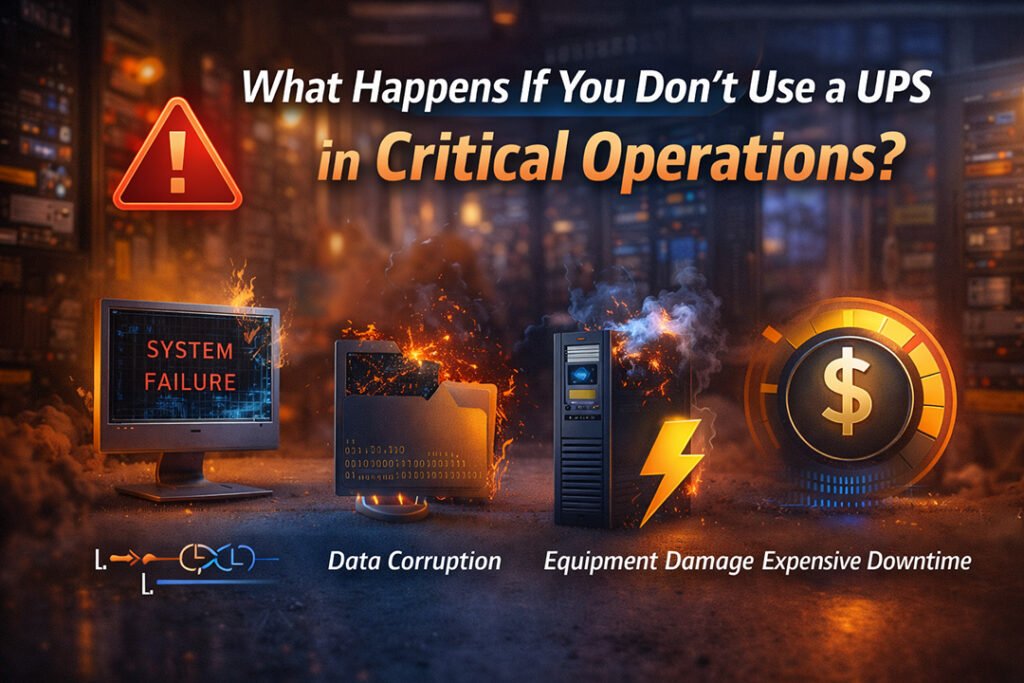
In today’s digital and industrial environment, uninterrupted power is no longer optional. For businesses operating in California, where grid instability, wildfire-related shutdowns, and rolling outages are increasingly common, operating without a UPS system exposes critical operations to serious risk.
A UPS, or Uninterruptible Power Supply, acts as a protective barrier between your equipment and unstable utility power. Without it, even a brief interruption can result in significant operational and financial consequences.
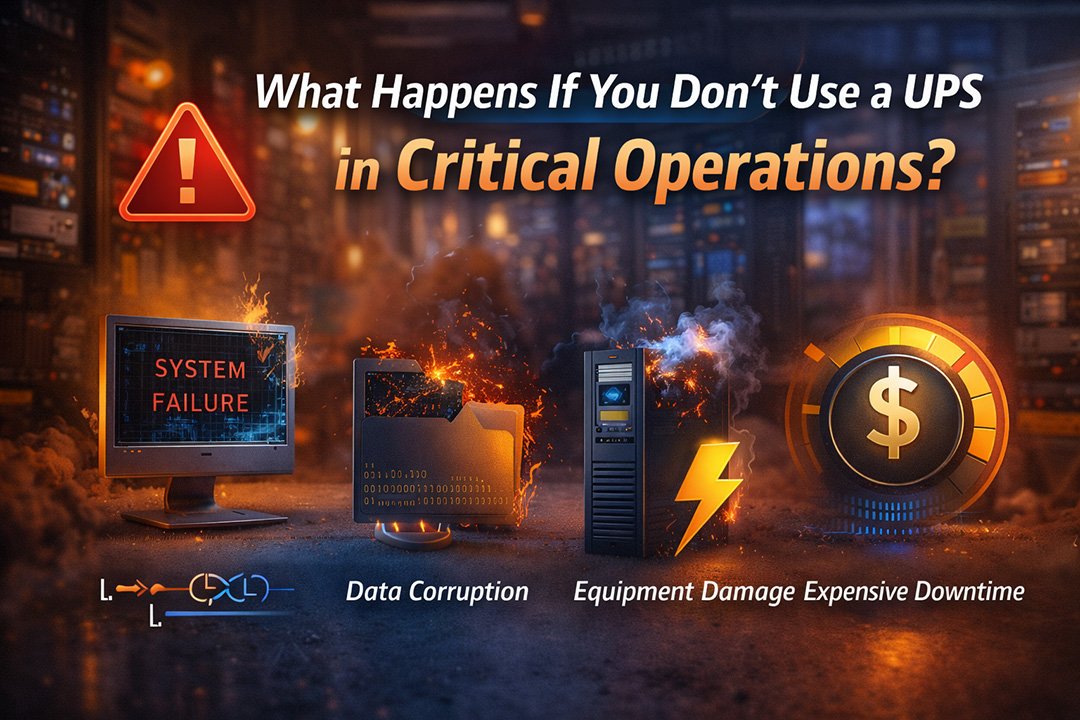
Let’s examine what can happen when critical systems operate without proper UPS protection.
1. Immediate System Shutdowns
When utility power fails, equipment without a UPS shuts down instantly.
This can lead to:
- Server crashes
- Corrupted databases
- Interrupted transactions
- Loss of unsaved data
For example, a retail business processing payments during a power interruption may lose transaction data. A manufacturing facility could experience production line stoppages. In healthcare environments, system failures may impact patient care systems.
Even outages lasting only seconds can cause major disruption.
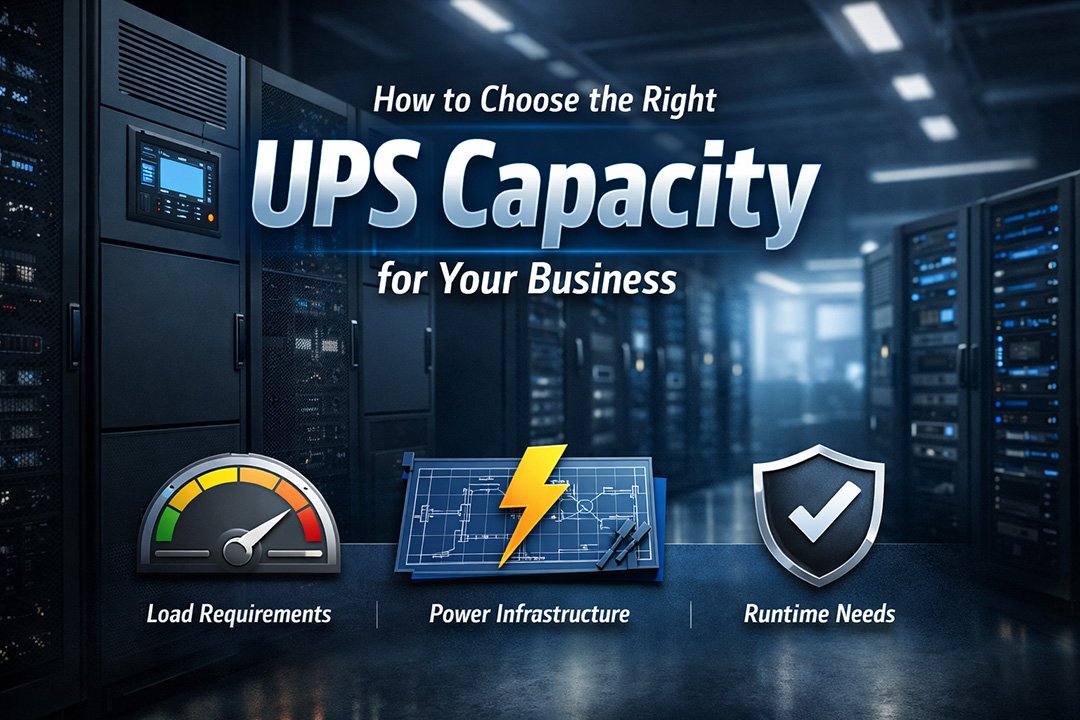
Businesses looking to prevent these scenarios typically rely on properly sized commercial UPS systems to maintain continuity during sudden power events.
2. Data Loss and Corruption
Modern businesses depend heavily on digital systems. Without backup power:
- Files may become corrupted
- Operating systems may be damaged
- Databases may require restoration
- Backup processes may fail
Data recovery is often costly and time-consuming. In some cases, information cannot be recovered at all.
For data centers and IT-driven companies across California, this risk alone justifies investing in reliable UPS infrastructure.
3. Equipment Damage from Voltage Fluctuations
Power problems are not limited to blackouts.
Common electrical disturbances include:
- Voltage sags
- Surges
- Spikes
- Frequency variations
Sensitive electronics are particularly vulnerable. Repeated exposure to unstable voltage can shorten equipment lifespan and lead to premature component failure.
Online double-conversion UPS systems continuously regulate incoming power, protecting connected equipment from harmful fluctuations.
4. Operational Downtime and Revenue Loss
Downtime is expensive.
In commercial and industrial environments, even short interruptions can cause:
- Production delays
- Missed deadlines
- Service disruptions
- Contract penalties
For California businesses operating in manufacturing, logistics, healthcare, and technology sectors, uptime is directly tied to profitability.
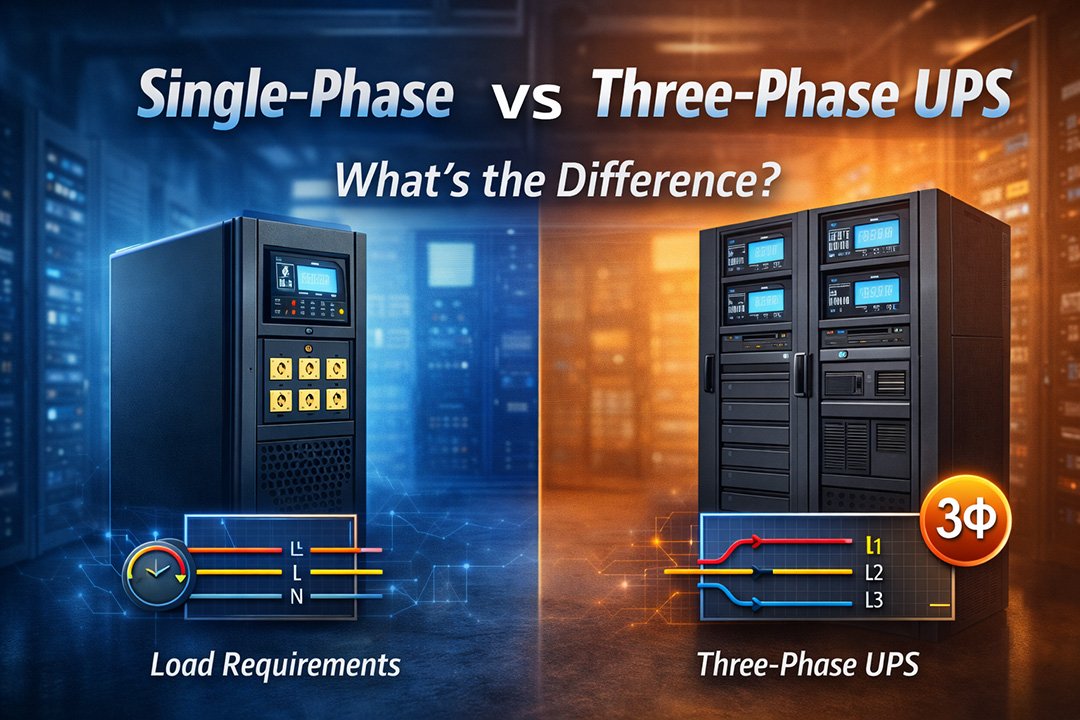
Facilities using three-phase UPS solutions are better equipped to handle higher loads and maintain operational stability during power disruptions.
5. Increased Maintenance and Repair Costs
Without a UPS system absorbing electrical disturbances, equipment is directly exposed to unstable grid conditions.
This often results in:
- Frequent repairs
- Component replacements
- Battery damage
- Increased service calls
Over time, these costs exceed the investment required for a proper UPS system.
Regular inspections and proactive UPS maintenance services further ensure systems remain reliable and prepared for unexpected outages.
6. Safety Risks in Critical Environments
Certain industries cannot tolerate power interruptions due to safety concerns.
Examples include:
- Hospitals and diagnostic centers
- Industrial automation facilities
- Transportation hubs
- Data centers
Unexpected shutdowns can create hazardous conditions, especially when machinery or life-support systems are involved.
In these environments, UPS systems are not just operational tools but essential safety infrastructure.
7. Vulnerability During California Power Events
California faces unique power reliability challenges, including:
- Wildfire-related Public Safety Power Shutoffs
- Rolling blackouts during peak demand
- Heat-related grid strain
- Infrastructure upgrades
Businesses without UPS protection are particularly vulnerable during these events.
For planned maintenance shutdowns or grid instability, some organizations also utilize temporary UPS rental solutions to maintain continuity during transitional periods.
8. Reputational Damage
Clients expect reliability.
Repeated service interruptions can damage a company’s reputation and erode customer trust.
For service-based industries, even a single major outage can result in:
- Negative reviews
- Lost contracts
- Reduced client confidence
Investing in proper power protection demonstrates operational professionalism and commitment to service reliability.
9. Reduced Productivity
Frequent minor outages or power disturbances can reduce employee productivity.
System reboots, reconnections, and troubleshooting consume valuable work time. Over months and years, this hidden cost becomes substantial.
A UPS ensures seamless transitions during brief interruptions, allowing operations to continue without disruption.
10. Compliance and Regulatory Issues
Certain industries must meet uptime and power protection standards, including:
- Healthcare facilities
- Financial institutions
- Data centers
- Government infrastructure
Operating without appropriate backup power may expose organizations to regulatory violations or audit failures.
Properly engineered UPS systems help meet compliance requirements and industry standards.
How a UPS Prevents These Risks
A properly sized UPS provides:
- Instant battery backup during outages
- Continuous voltage regulation
- Surge suppression
- Safe shutdown capability
- Scalable runtime options
Modern systems are designed for efficiency, reliability, and integration with generators when necessary.
Final Thoughts
Operating without a UPS in critical environments is a significant risk. From data loss and equipment damage to operational downtime and financial loss, the consequences can be severe.
For California businesses facing increasing grid instability, investing in reliable power protection is not just a technical decision. It is a strategic one.
A well-designed UPS system protects your infrastructure, ensures operational continuity, and safeguards your long-term business stability.