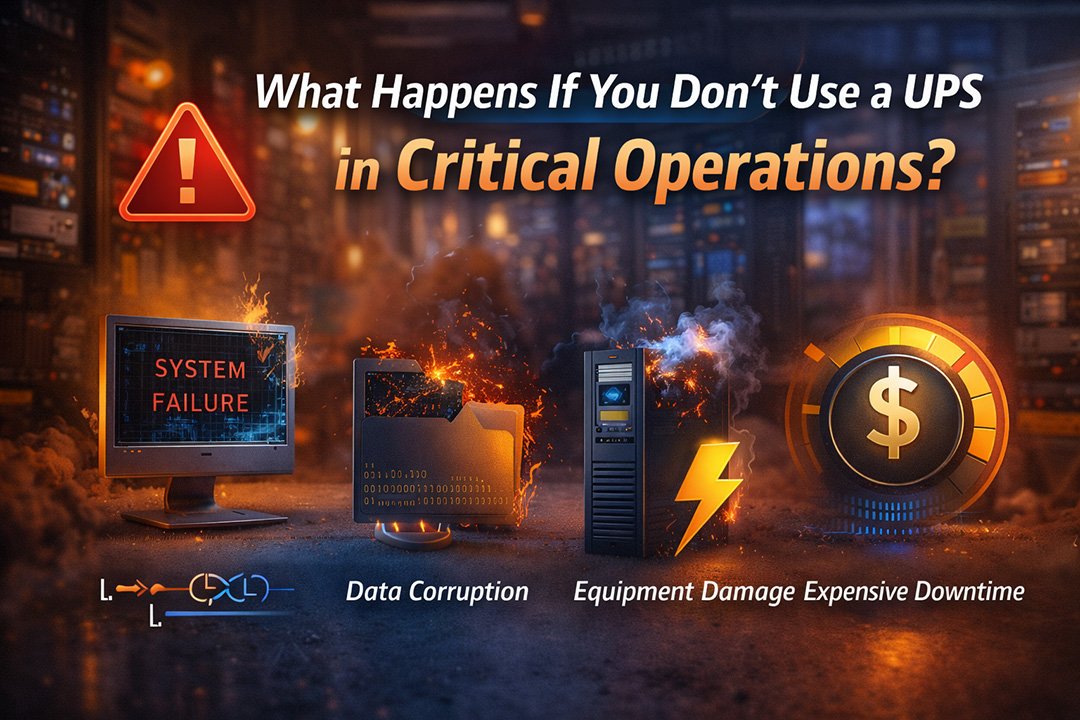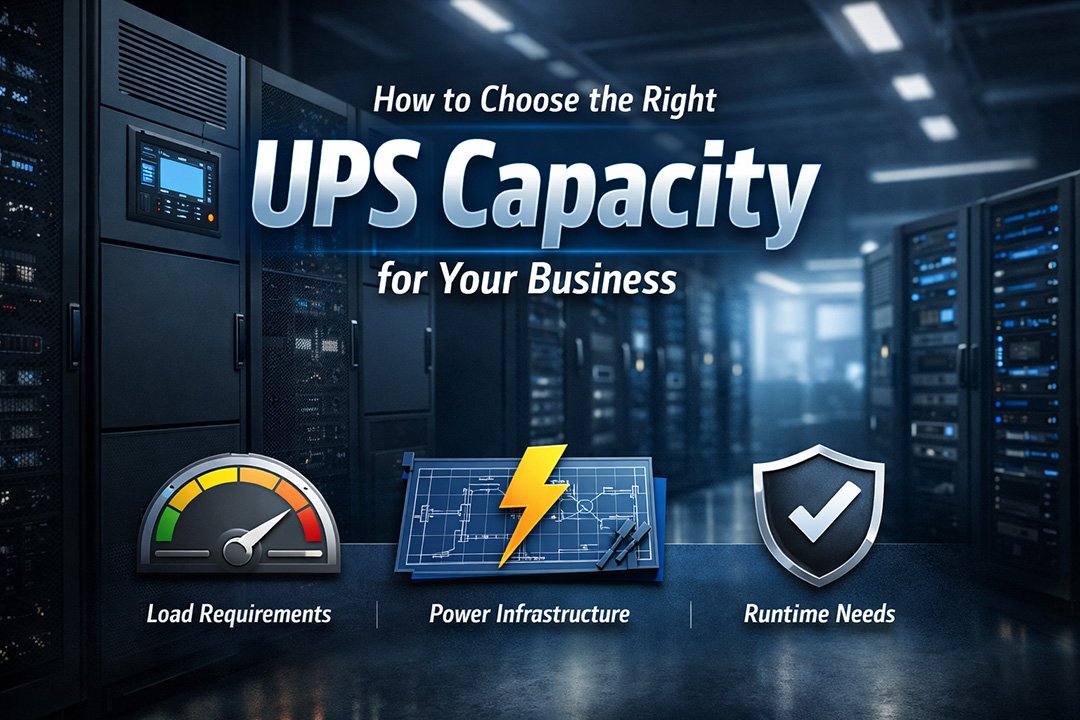
Power interruptions in California are becoming increasingly common due to grid instability, wildfire-related Public Safety Power Shutoffs (PSPS), and infrastructure strain. For businesses that rely on continuous power, choosing the right UPS capacity is critical to preventing downtime, equipment damage, and financial loss.
Whether you operate a data center in Los Angeles, a healthcare facility in San Diego, or a manufacturing plant in Northern California, proper UPS sizing ensures reliable and stable power protection.
Why Proper UPS Sizing Matters
Selecting the wrong UPS size can create serious problems:
- An undersized UPS may overload and fail during peak demand
- An oversized UPS increases unnecessary capital cost
- Incorrect runtime calculations may leave your systems unprotected
If you’re unsure where to start, you can view our commercial UPS systems to compare available capacity ranges and configurations.
Step 1: Identify All Critical Equipment
Begin by listing all equipment that must remain operational during a power disruption. Common examples include:
- Servers and IT infrastructure
- Network switches and firewalls
- Point-of-sale systems
- Industrial control panels
- Medical diagnostic equipment
Check each device’s power rating label. This will usually be displayed in watts (W), volts (V), or amperes (A).
Step 2: Calculate Total Power Requirement
Add up the total wattage of all connected devices.
Example:
- Server rack: 2,500W
- Network equipment: 800W
- Monitoring systems: 700W
Total load = 4,000 watts
Step 3: Convert Watts to kVA
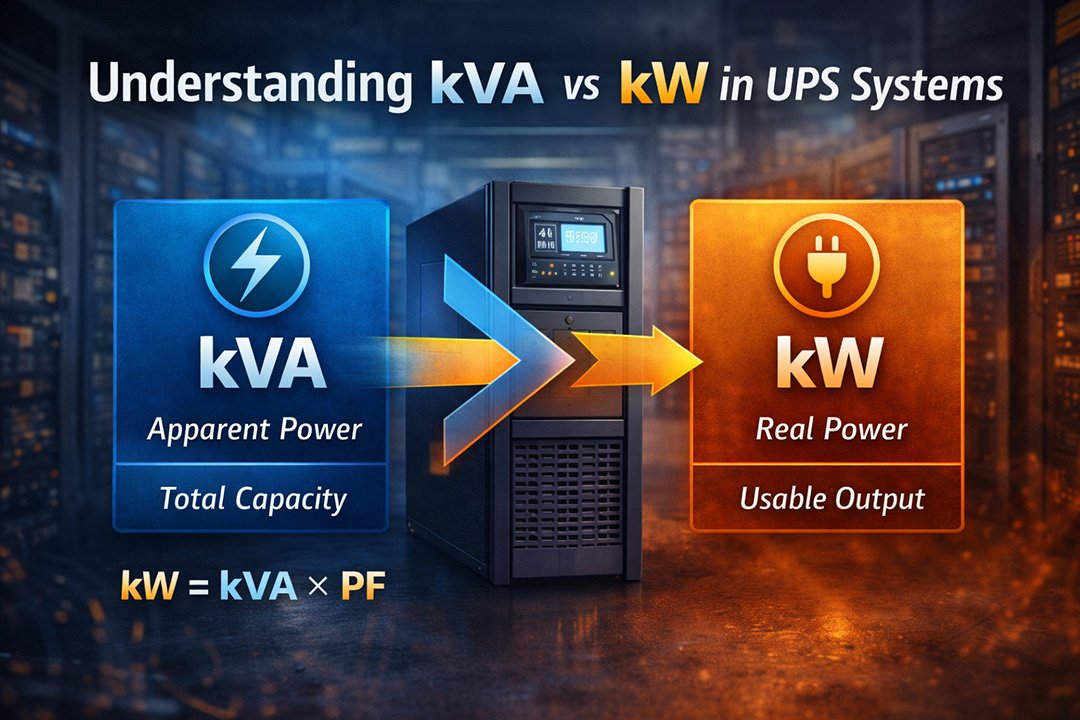
UPS systems are typically rated in kVA (kilovolt-amperes).
To calculate required kVA:
kVA = Total Watts ÷ Power Factor
If using a modern UPS with a 0.9 power factor:
4,000 ÷ 0.9 = 4.44 kVA
You would typically select a 5kVA UPS to allow proper headroom.
Step 4: Add Growth Margin
California businesses often expand IT capacity over time. It is recommended to add:
20–30 percent extra capacity
This prevents overload and extends system lifespan.
Step 5: Determine Required Runtime
Runtime depends on your operational strategy:
- 5–10 minutes: Safe shutdown only
- 15–30 minutes: Short outage protection
- 1+ hour: Extended operation during grid shutdowns
Businesses in wildfire-prone areas of California may require extended runtime capability.
External battery cabinets can increase runtime significantly.
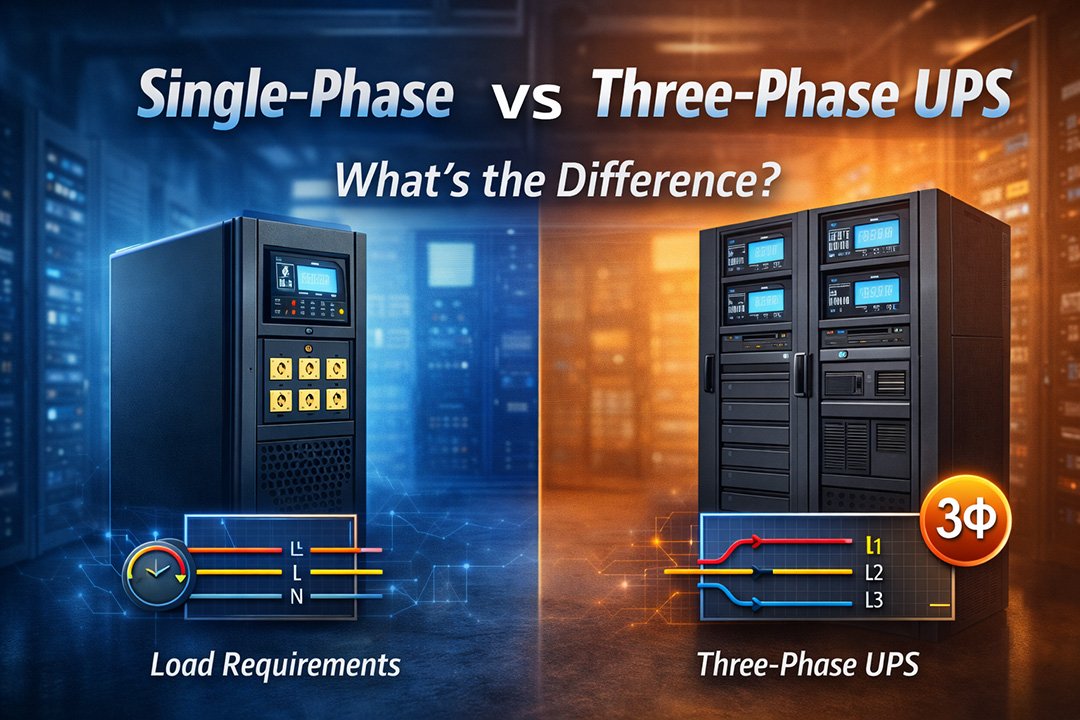
Step 6: Consider Single-Phase vs Three-Phase
Small offices typically use single-phase UPS systems. Larger commercial or industrial facilities use three-phase systems for higher capacity and balanced load distribution.
Choosing the correct phase type ensures compatibility with your facility’s electrical infrastructure.
Step 7: Plan for Long-Term Reliability
Proper sizing is only part of the equation. Ongoing inspection and battery testing are critical to system performance. Our UPS maintenance services help businesses across California maintain reliability and extend equipment lifespan.
For planned shutdowns or emergency coverage during system upgrades, many companies also rely on temporary UPS rental solutions to maintain uninterrupted operations..
When to Consult a Power Specialist
While online calculators provide estimates, a professional load assessment ensures:
- Accurate sizing
- Proper electrical compatibility
- Battery runtime calculations
- Future scalability planning
A site evaluation is highly recommended for mission-critical operations.
Final Thoughts
Choosing the right UPS capacity is not just about power rating. It requires understanding your load, runtime needs, growth plans, and environmental risks.
For California businesses facing increasing grid instability, investing in properly sized UPS protection ensures long-term operational continuity and equipment protection.