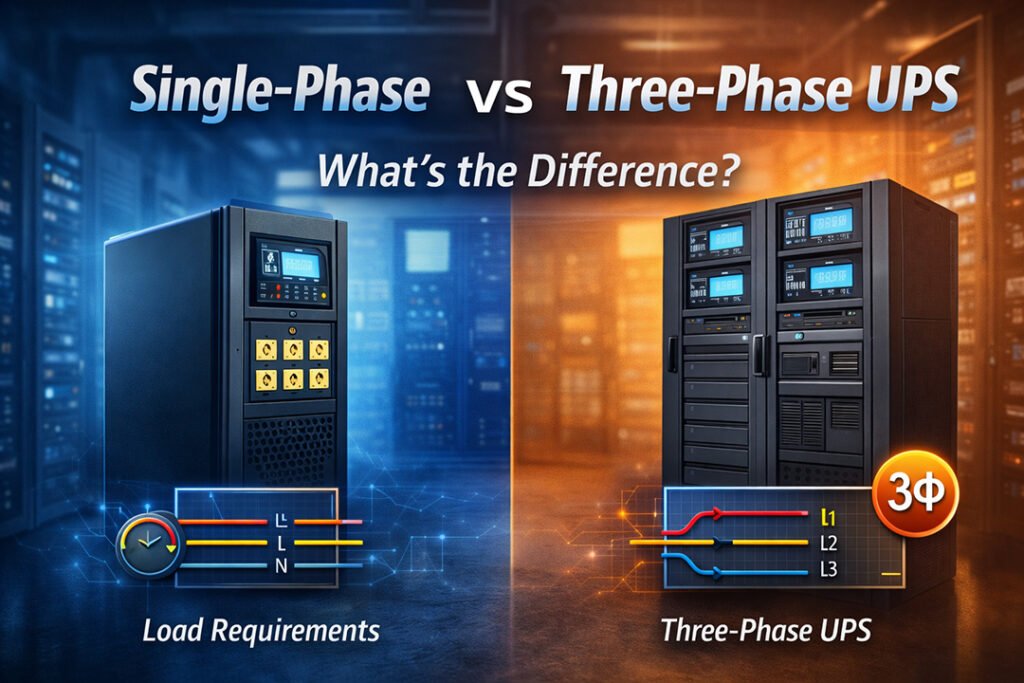
Single-Phase vs Three-Phase UPS: What’s the Difference?
Choosing between a single-phase and three-phase UPS system is one of the most important decisions when designing a reliable power protection strategy. For California businesses facing grid instability, rolling outages, and wildfire-related shutdowns, selecting the right configuration directly impacts performance, efficiency, and long-term scalability.
Understanding the difference begins with how power is delivered to your facility.
What Is a Single-Phase UPS?
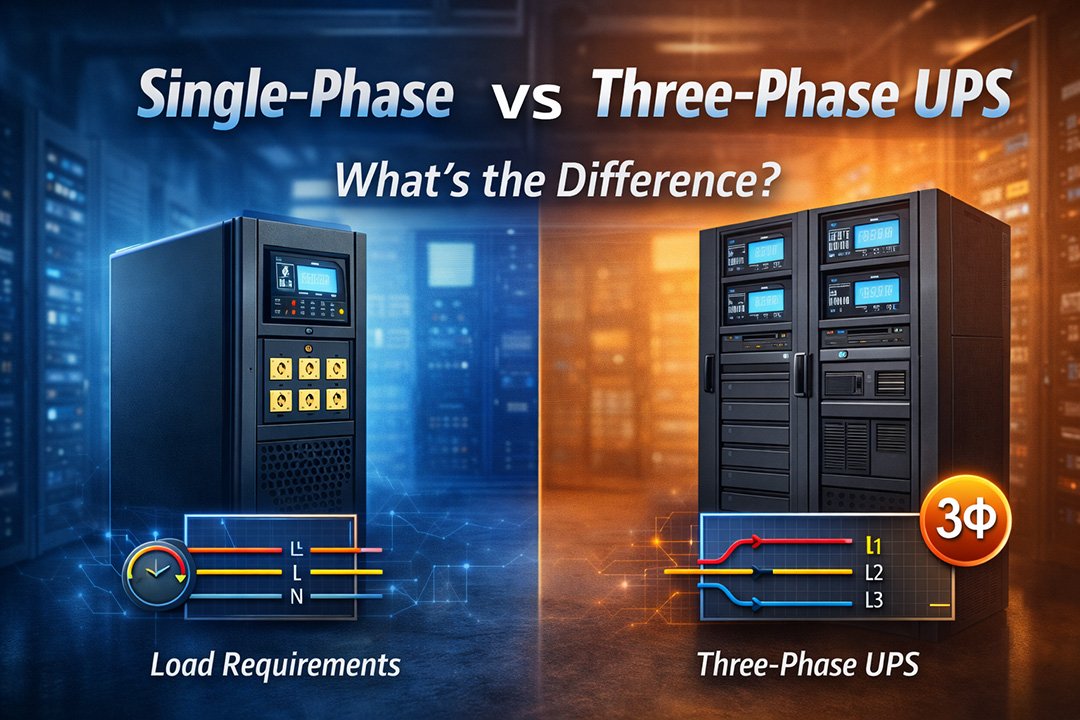
A single-phase UPS supports equipment powered by single-phase electrical supply. This is the most common type of electrical infrastructure found in:
- Small offices
- Retail stores
- Network closets
- Small server rooms
- Residential buildings
Single-phase systems typically operate at lower capacities and are ideal for light to moderate power loads.
When Single-Phase Makes Sense
A single-phase UPS is suitable if:
- Your total load requirement is relatively low
- Your building has single-phase utility power
- You are protecting individual racks or small IT setups
- You do not anticipate rapid load expansion
For many small businesses in California, a properly sized single-phase unit from our catalog of commercial UPS systems provides reliable and cost-effective protection.
What Is a Three-Phase UPS?
A three-phase UPS is designed for facilities with three-phase electrical infrastructure. It distributes power across three alternating currents, allowing it to handle larger loads more efficiently.
Three-phase systems are commonly used in:
- Data centers
- Hospitals and healthcare facilities
- Manufacturing plants
- Large commercial buildings
- Industrial operations
These systems are engineered to manage high-capacity loads while maintaining balanced power distribution.
Key Differences Between Single-Phase and Three-Phase UPS
1. Power Capacity
Single-phase UPS systems typically support smaller loads, while three-phase systems are built for high-capacity applications.
If your facility requires significant power redundancy, three-phase UPS solutions offer greater scalability and performance.
2. Electrical Infrastructure Compatibility
The type of UPS you choose must match your building’s electrical supply.
- Single-phase building → Single-phase UPS
- Three-phase building → Three-phase UPS
Installing the wrong type can result in inefficiencies or require costly electrical modifications.
3. Efficiency at Higher Loads
Three-phase systems are generally more efficient when supporting heavy loads. They distribute electrical stress more evenly, reducing overheating and improving performance under demanding conditions.
This is particularly important for California data centers operating in high-temperature environments.
4. Scalability and Parallel Capability
Three-phase UPS systems often allow parallel configurations for:
- Redundancy (N+1 setups)
- Capacity expansion
- Load balancing
This is critical for mission-critical operations that cannot afford downtime.
Why the Decision Matters in California
California’s power grid presents unique challenges:
- Wildfire-related Public Safety Power Shutoffs
- Rolling blackouts
- High commercial energy demand
- Extreme heat conditions
Facilities that rely heavily on uninterrupted power must consider not just load size, but also resilience.
For example:
A small retail store in San Jose may only require a single-phase UPS.
A data center in Los Angeles will almost certainly require a three-phase configuration.
Runtime Considerations
Both single-phase and three-phase UPS systems can be configured with extended battery cabinets for longer runtime.
However, larger facilities often combine three-phase systems with professional UPS maintenance services to ensure battery health and system reliability over time.
Preventive maintenance is critical for maintaining optimal performance, especially in high-demand industrial environments.
Cost Differences
Single-phase UPS systems are generally:
- Lower initial cost
- Easier to install
- Simpler to maintain
Three-phase systems involve:
- Higher upfront investment
- More complex installation
- Greater scalability and long-term efficiency
The correct choice depends on operational needs rather than price alone.
When to Consider UPS Rental
If your facility is undergoing electrical upgrades or maintenance, temporary coverage may be required. Many businesses rely on temporary UPS rental solutions during system transitions to avoid downtime.
This approach ensures continuity while permanent infrastructure is being installed or serviced.
How to Determine Which UPS Is Right for You
Ask the following:
- What type of electrical supply does my building have?
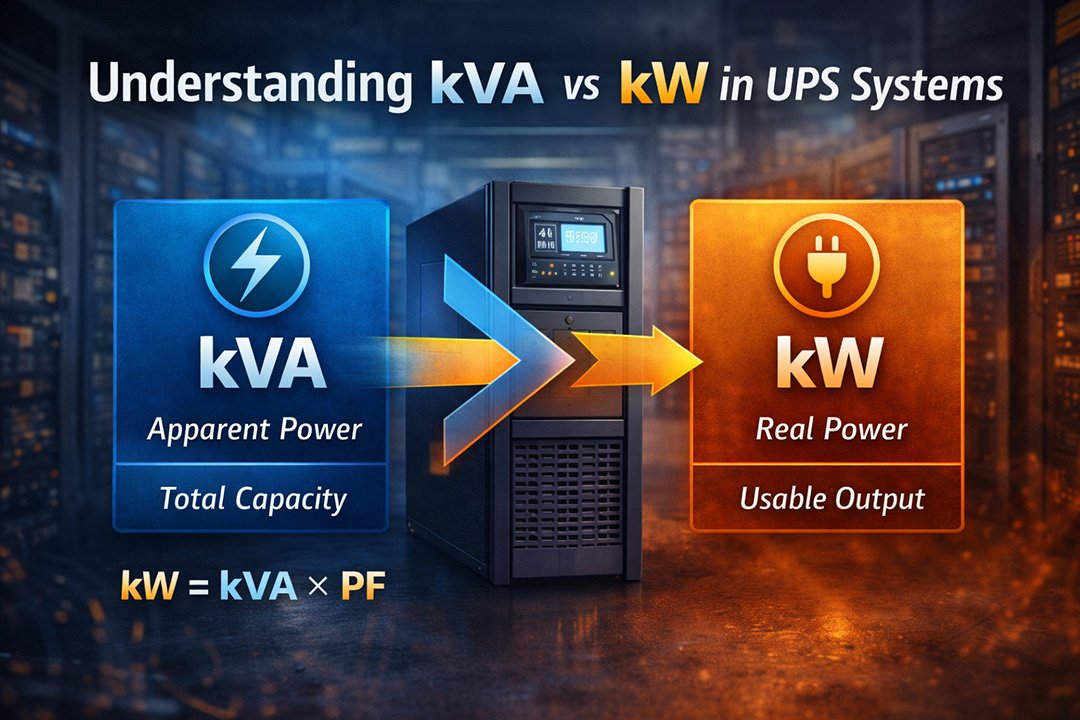
- What is my total load requirement in kVA?
- Do I expect future expansion?
- Is my operation mission-critical?
- What runtime do I require during outages?
A professional load assessment is recommended for accurate system sizing.
Final Thoughts
The difference between single-phase and three-phase UPS systems comes down to capacity, infrastructure compatibility, and operational demands.
Small to mid-sized facilities may function perfectly with single-phase systems. Larger commercial and industrial operations should strongly consider three-phase UPS for enhanced performance, efficiency, and scalability.
For California businesses facing increasing power reliability challenges, investing in the correct UPS configuration is essential to protecting operations and ensuring long-term continuity.